maNGOma is a charitable organisation which focuses on supporting community-based NGOs in the Global South through fundraising, project development and knowledge exchange. We aim to foster partnerships with grassroots NGOs to enhance their capacity and effectiveness to meet the needs of vulnerable communities. Subscribe to our newsletter if you'd like to find out more, or would like to be kept up-to-date about issues important to NGOs.
Hello from maNGOma!
|
HELLO from maNGOma! maNGOma is a UK registered charity that helps small, grassroots NGOs in the Global South and beyond to thrive. Through fundraising support, creative campaigning and - most importantly - the sharing of knowledge and experience between NGOs worldwide, we build partnerships based on equality and mutual learning. Our approach is collaborative and future-focused: we connect local action with global solidarity, enabling communities to strengthen resilience, expand opportunities, and achieve lasting change.
SPOTLIGHT ON:3STARS REHABILITATION NETWORK
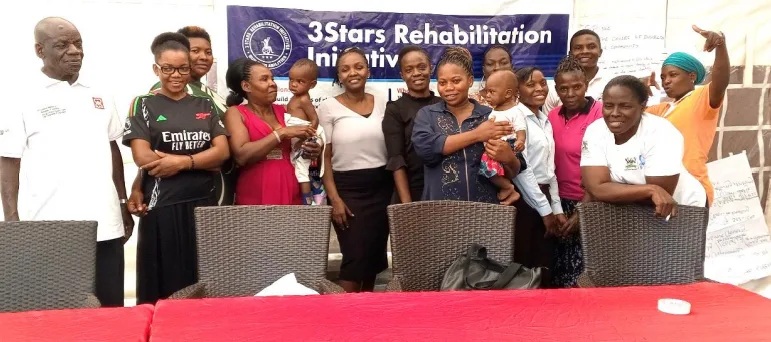
3Stars Rehabilitation Network is a non-profit which focuses on using a community-based rehabilitation approach to rehabilitate children (0-18 years) with disabilities in Uganda. The organisation operates in refugee settlements and Ugandan districts, supporting both refugees and Ugandans. 3Stars provides rehabilitation services, trains community workers and caregivers, and supports small businesses through seed funding. Alongside this, 3Stars provides training for caregivers on how to create low-cost learning materials for their children using locally available resources, and supports teachers on how to offer motor development for children with developmental challenges in schools. SECTOR NEWS and COMMENTChildren are the worst affected by the devastating Venezuela earthquake The UN Children's Fund (UNICEF) has warned that children are among those worst affected by the disaster, estimating that 650,000 people – including 234,000 children – will need humanitarian assistance. The UN has so far estimated that the damage caused by the earthquake is in the region of $37 billion, where over 3,000 people have lost their lives. To find out more or to donate to UNICEF's response click here... Why climate finance should go into agriculture Agriculture is responsible for about 33% of global greenhouse gas emissions according to CGIAR yet only around 3% of climate finance is directed to agriculture. Ismahane Elouafi, Executive Managing Director of CGIAR, in an interview with Devex, claims that we need to aim for 33% as food systems must be treated as a central pillar of climate action rather than a side issue. She cautions that any green transition should be fair to farmers, particularly in low- and middle-income countries and states “the food agenda is part of the [climate] problem, which we all know, but also part of the solution,” she adds. “Agriculture could be one of the best solutions we can use, along with energy.” Read more about this here... What could the development sector learn from China's approach to food security? The speed of China's food system's transformation is impressive. No other country has gone from famine to feeding 1.4 billion people in 60 years. Matthew Kessler reports on the lessons that can be learnt for the development community, particularly in the areas of political commitment, co-ordination and collateral damage. Read more here... Development banks' nuclear energy stance is changing The Inter-American Development Bank Group has become the latest multilateral lender to drop its long-standing ban on financing nuclear energy, strengthening the pro-nuclear trend sweeping through the development bank world and potentially signalling a shift in Latin America’s future energy mix. Find out why here... PEOPLE and PROJECTS CHANGING the WORLDMzalendo - strengthening Kenya's democracy Mzalendo is a civic tech organisation which acts as an independent digital watchdog on the Kenyan parliament. It tracks MPs, legislation development, and the cost of living. Its Parliamentary Scorecard has had great success in publicising, through major Kenyan newspapers, which politicians actually speak for the public and how they vote. It is being successful in holding politicians to account and building a stronger democracy. And if you're interested in developing civic tech to strengthen democracy in your own country the Digital Democracy Initiative funds and supports small civil society organisations in developing solutions to state-sponsored online election manipulation. And the African Civic Tech Atlas is an open-source software repository for democratic software tools built within Africa. Find out more about civic tech here... Kiva - providing business loans to underserved communities Kiva is an international non-profit that provides underserved communities with access to crowdfunded loans. And, although one loan doesn't change the world, it can mean everything for that one person and her family, like sending her kids to school, accessing clean water, and growing a business. Kiva offers loans to refugees and displaced people, and has found that their repayment rates are the same as non-refugees. Find out more about the organisation here... Los Comandos de Salvamento - teenagers saving people from gang violence in El Salvador El Salvador is one of the most dangerous countries in the world and subject to extreme gang violence. The volunteers from Los Comandos de Salvamento , however, are bravely responding to violent incidents perpetrated by any gang and saving many lives. The volunteers' bright yellow and green uniforms, and matching vehicles, act as a neutral shield enabling them to access areas that even the police do not enter. A large proportion of the volunteer workforce consists of teenagers and young adults. This provides them with a strong community, purpose and structure that keeps them safe and insulated from gang recruitment. Find out more about their work here...
"Solving the world's biggest problems takes ensembles, not soloists." Jeffrey Walker, United Nations
RESOURCES and INFORMATION
Participatory grant making Participatory grant making is a way of redistributing power and transforming relationships between funders, established NGOs and the populations they support. The impact of this redistribution can be particularly profound for groups who are usually excluded from decision-making processes. Read this guide on participatory grant making, created by the Joint Initiative for Strategic Religious Action, here... Measuring violence in and around schools: evidence from Malawi Approximately one billion children worldwide report having experienced physical, emotional, or sexual violence, yet existing evidence suggests this figure substantially underestimates true prevalence, as individuals often avoid disclosing their experiences of violence. In this report, researchers analyse which survey methods yield more reliable measures of violence against children. Read more about this here and listen to the podcast here... How AI is providing better data, more equitable access and improved health outcomes Responsible AI solutions developed with communities are helping strengthen health systems, improve service delivery and support more equitable access to care. Read more about the AI systems developed specifically through the Artificial Intelligence for Global Health initiative here... Participatory development storytelling As our world is becoming increasingly saturated by online interactions, many of which we cannot trust as AI expands its reach, authenticity is becoming harder to recognise and even harder to trust. Brigitte Perenyi explains why storytelling is not just a communication tool to cut through online noise, it is also a mechanism for human connection, accountability and trust. Read more about this here... Free IT equipment The Turing Trust provides IT equipment to individuals and projects around the world. If you would like to apply click here... Delivery charges may apply. RAISING FUNDS AROUND the WORLDFocus on Social Impact Bonds As humanitarian aid agencies withdraw their support and public donations decline, private sector social finance can step in to invest in programmes that support their communities. In 2017 a familiar dilemma was faced by many state and local governments: how to integrate the thousands of non-English speaking immigrants and refugees arriving in the Boston area each year without risking scarce public funding on unproven programmes. These people had significant workforce potential but couldn't access jobs that matched their capabilities. But a social impact bond was created through a collaboration between the Commonwealth of Massachusetts, JVS Boston, and Social Finance. Vocational English language classes—integrated with job search assistance and coaching—assisted limited English speakers in making successful transitions to employment, higher-wage jobs, and higher education. The Massachusetts Pathways to Economic Advancement project deployed a Pay for Success model—also known as a Social Impact Bond—that shifted who bore financial risk and who benefited from success. Under this model, private investors provide risk capital up front and are paid back only when predetermined, measurable outcomes are achieved. Although there are many different models, in this case: impact investors provided up-front capital to JVS Boston to deliver its English for Advancement program to approximately 2,000 limited-English speakers over six years. JVS integrated vocational English-language classes with job-search assistance, career coaching, and employer connections, helping participants transition to employment and higher-wage jobs. An independent evaluator, Economic Mobility Corporation, measured wage growth via a randomized controlled trial (RCT)—the first such rigorous study of a workforce-development program for English-language learners. Massachusetts agreed to repay investors only if participants received measurable wage increases. The evidence was so compelling that Massachusetts signed a new outcomes-based contract with JVS to continue the English for Advancement program beyond the initial project period. The program “ended” in 2023, but only in the sense that the initial Pay for Success deal concluded. The model was so effective that the state embedded it into ongoing policy and expanded funding—exactly the systemic change that outcomes-based financing aims to achieve. The Massachusetts Pathways case demonstrates four critical lessons for refugee and immigrant economic integration. First, outcomes-based financing can mobilize capital for integration that traditional grants cannot. Second, rigorous evaluation changes policy. Third, small pilot programmes catalyse broader adoption. (The Pathways project started by serving 2,000 immigrants. It established a model that the state—and others—can replicate and expand.) Fourth, success requires alignment across all stakeholders. The deal worked because everyone had incentives aligned around wage outcomes: The state paid for results, investors got returns from impact, JVS had performance incentives, and participants benefited. If you're interested in understanding more about Social Impact Bonds, you can read about them here... For other examples look at: HMP Peterborough which reduced reoffending rates for people who had been in prison; Educate Girls that seeks to enrol and improve the quality of education for girls in Rajasthan, India; and Programa Primero Lee in Chile which helps children develop literacy skills and builds teaching capacity in vulnerable schools.
"Donors don't give to institutions. They invest in ideas and people in whom they believe." GT Smith
WAYS to GET INVOLVED WITH or SUPPORT maNGOmaBecome a Partner maNGOma has created a Connections Group for all of its partners to build new relationships with other maNGOma partners. This will enable NGOs to work together along common themes and also to find common solutions and support to the challenges that their communities are facing. Become a volunteer Wherever you are in the world you can volunteer for maNGOma. Various roles include social media marketing, bid writing and project support, administration, and fundraising. We would always be interested to hear from anyone who has a passion for our work, or has experience that they can share with us. Just get in touch at office@mangoma.org. Make a donation If you are passionate about supporting maNGOma and the impact that our work has through our partners please consider making a regular or one-off donation. You can do this here. Our sustainability and those of our partners relies upon the generosity of people like you. Thank you very much. About maNGOma We are a small charity, so if you have any contacts that you think would be interested in our work or in reading our newsletter, please pass this on. If you are a maNGOma partner and you would like to advertise your NGO's ethical products in maNGOma's newsletter, please get in touch.
|

Louise Richmond
maNGOma is a charitable organisation which focuses on supporting community-based NGOs in the Global South through fundraising, project development and knowledge exchange. We aim to foster partnerships with grassroots NGOs to enhance their capacity and effectiveness to meet the needs of vulnerable communities. Subscribe to our newsletter if you'd like to find out more, or would like to be kept up-to-date about issues important to NGOs.
HELLO from maNGOma! maNGOma is a UK registered charity that helps small, grassroots NGOs in the Global South and beyond to thrive. Through fundraising support, creative campaigning and - most importantly - the sharing of knowledge and experience between NGOs worldwide, we build partnerships based on equality and mutual learning. Our approach is collaborative and future-focused: we connect local action with global solidarity, enabling communities to strengthen resilience, expand opportunities,...